
Women & children's / Arts and health
European Healthcare Design 2018
Integrating art into clinical briefing and early design development to deliver child-friendly environments that enhance the patient and family experience
By Crispin Walkling-Lea and Vivienne Reiss | 08 Jun 2018 | 0
This poster will highlight specific case studies from the GOSH redevelopment masterplan to demonstrate how we’ve attempted to ensure that art is an early consideration in all projects.
Abstract
Integrating art into clinical briefing and early design development to deliver child-friendly environments that enhance the patient and family experience
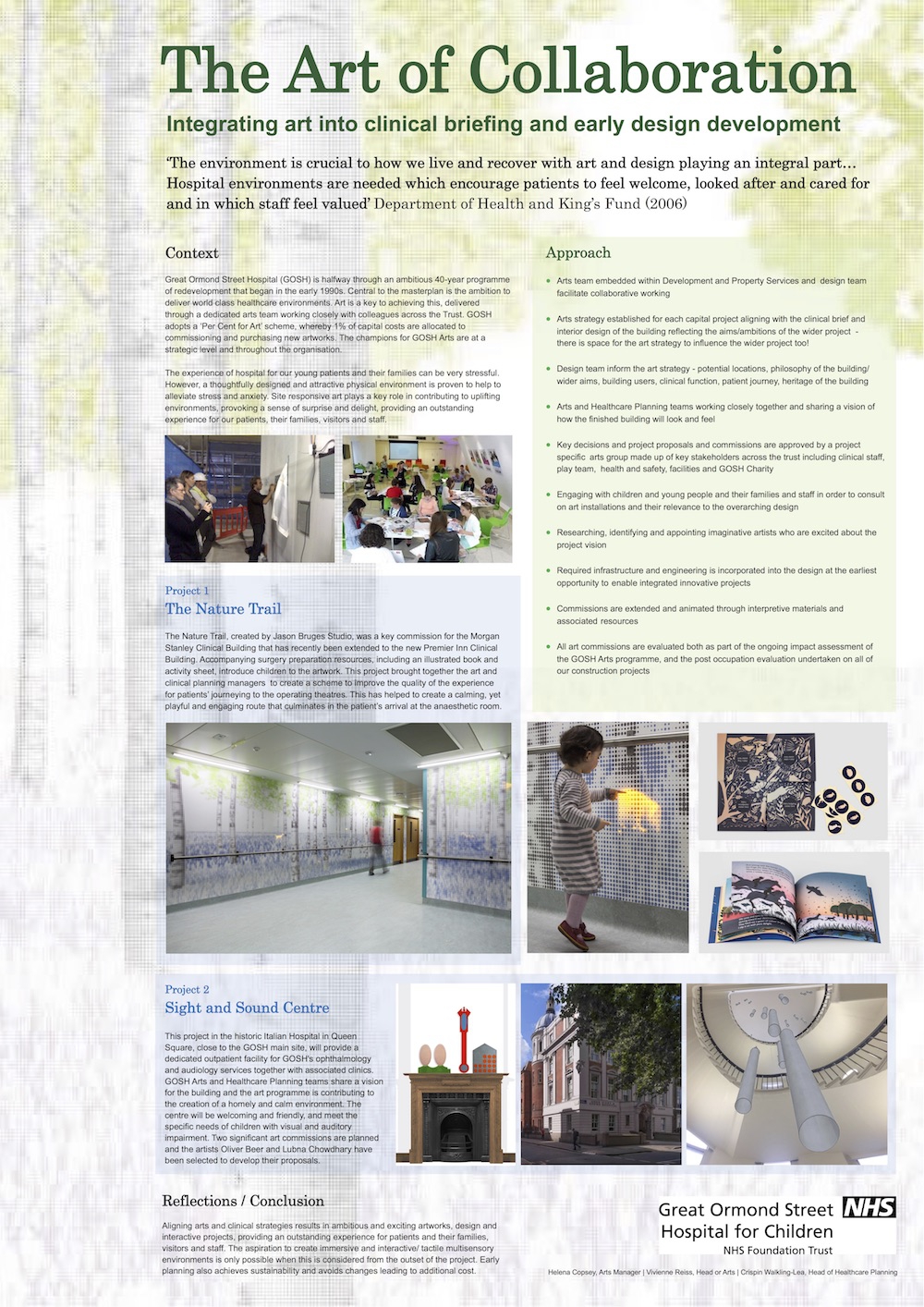
Across recent and emerging redevelopment projects, Great Ormond Street Hospital (GOSH) has learned the value of integrating art into clinical design briefs and early design development, to ensure the delivery of the best possible environment that enhances the experience of hospital for the child and their family.
This poster will highlight specific case studies from the GOSH redevelopment masterplan to demonstrate how we’ve attempted to ensure that art is an early consideration in all projects.
The necessity of integrating requirements for art into the clinical brief will be presented. This approach ensures that the required infrastructure and engineering is incorporated into the design at the earliest opportunity to support proposed art installations, and ensure that changes and additional cost are avoided. The development of an art strategy and the benefits of its alignment with the clinical design brief will be explored.
Consideration will be given to the importance of the arts and healthcare planning teams working closely together and sharing a vision of how the finished building will look and feel. There will be presentation of strategies for engaging with children, young people and their families to consult on art installations, and their relevance to the overarching facility design. Funding for art in hospital will be briefly explored, as well as strategies for ensuring that this funding is protected for the specific function of delivering the arts programme.
The following GOSH projects will be used as case studies:
- The Mittal Children’s Medical Centre – this building was constructed over two phases between 2006 and 2017. The project included a significant art installation, The Nature Trail by Jason Bruges Studio, specifically developed to provide a means of distraction for children on their journey to the operating theatres. It was necessary to undertake detailed planning to incorporate essential infrastructure for the digital elements of the installation into the building fabric.
In addition to the physical installation, accompanying surgery preparation resources, including an illustrated book and activity sheet, introduce children to the artwork. These resources also provide a mechanism for play preparation and distraction prior to and on the day of planned procedures.
- The Sight & Sound Hospital – this project in the historic Italian Hospital in Queen Square, close to the GOSH main site, will provide a dedicated outpatient facility for GOSH’s ophthalmology and audiology services, together with associated clinics including ENT, Speech and Language Therapy, Craniofacial and Cleft Lip and Palate. The GOSH arts and healthcare planning teams share a vision for the building that will provide a more domestic and homely environment, which will be welcoming and friendly, and meet the specific needs of children with visual and auditory impairment.
From the outset of the briefing of the Sight & Sound Hospital, the integration of art has been a key consideration. In this poster, we’ll explain how the clinical brief and art strategy were developed in tandem, and how the identified key locations for art have been given careful consideration throughout the clinical planning process. Furthermore, the involvement of the GOSH Arts team in the interior design of the building has been crucial in ensuring that the vision for a facility that delivers a great patient experience is protected.
In addition to these case studies, general principles for aligning arts and healthcare planning teams will be presented, as well as logistical and practical considerations. Lessons learned through the GOSH projects will be explored and the response of patients and families to recent GOSH arts installations and initiatives will be referenced.
Organisations involved