

Cities / Healthy Cities
Urban planning and design for arid cities stuck in the 1950s
By Andrew Sansom | 20 Mar 2018 | 0
Arid cities must move on from a 1950s paradigm of city planning and design, or face becoming increasingly less habitable as they become drier. So says a new report by Arup, which warns that 20th century technologies, such as air conditioning, have allowed the explosive but unsustainable growth of arid cities.
The report, ‘Cities alive: rethinking cities in arid environments’, urges cities to learn from innovative developments around the world, such as industrial-scale fog and dew harvesting, as well as cooling pavements, which can reduce ambient temperatures by up to 7OC.
Aridity occurs because of a complex interplay between climate and geography, in parts of the world, such as the subtopics, where there is dry, descending air. Arid regions are also found on the sheltered sides of major mountain ranges, where ‘rain shadows’ are created, such as the Andes, and on very hot land surfaces far from major water bodies, such as inland Australia.
Almost a third of the world’s land surface is currently classified as ‘arid’ and this is set to increase as climate change leads to more frequent, extreme weather events, such as drought. At the same time, many cities are experiencing the urban heat island effect, where they become hotter than the surrounding rural areas. This is particularly impacting arid cities, increasing water use and reducing their ability to sustain existing standards of living.
Today, the Arabian Gulf region and the American southwest are home to a number of cities that, up until a century ago, did not have the capability to support millions of inhabitants. 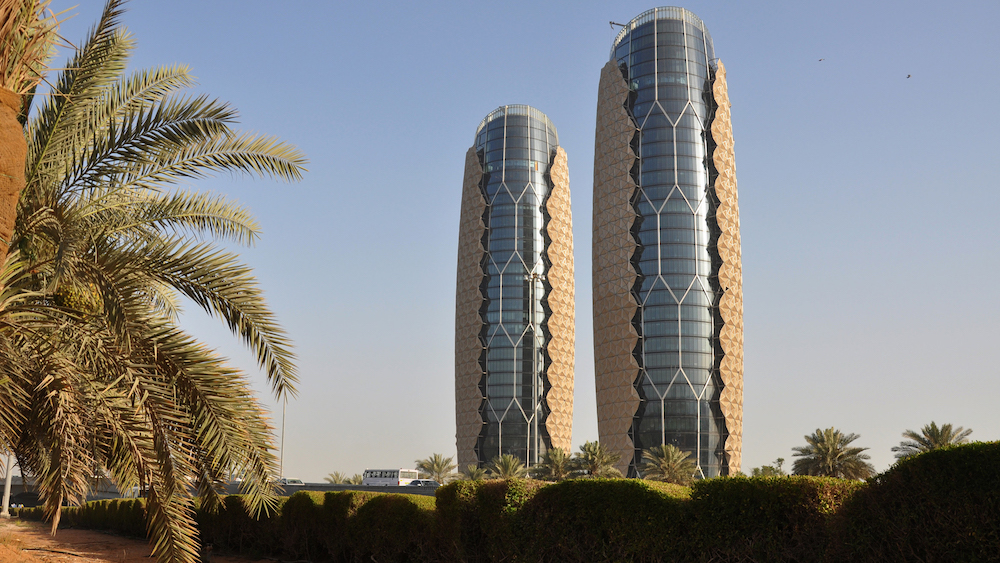
It’s only through innovations such as desalination technology, access to global food supply chains, climate-controlled buildings, personal cars, and complex engineering projects that cities such as Las Vegas and Abu Dhabi have been able to support current population levels.
New environmental challenges
But, as the report points out, many of the same technological innovations that have enabled explosive growth and dramatic increases in quality of life are unsustainable and have resulted in new environmental challenges. These include: climate change; desertification and degraded local habitats; water scarcity; public health issues related to air pollution; and urban heat islands.
The report outlines three key principles in shaping city-building in arid regions for the 21st century. Cities need to learn from the past and make use of locally adapted, climate-specific design solutions, says Arup. They need to invest in green and blue infrastructure to increase the resilience of arid cities, and they should also design intelligent buildings and public spaces that respond to the demands of the climate.
“Cities in arid regions are expected to experience the highest rates of natural population growth and urbanisation in the coming century,” said urban planner and designer Hrvoje Cindric. “Yet most are still being planned and designed based on a global city-making paradigm from the 1950s. Cities need to adapt strategies that combine technological innovation with locally adapted and climatically appropriate solutions.”
Innovations for cities, public spaces and buildings
The report points to examples of initiatives in arid cities that are making them more sustainable, healthier and better places to live. A total of 36 possible interventions, at the city, public space and building level, are highlighted. These include:
- Fog and dew harvesting: this technology allows harvesting systems and materials to be optimised to extract large amounts of water, even in arid environments with low levels of humidity. The Sustainability Pavilion at the upcoming Dubai Expo 2020 will use hybrid structures that generate renewable solar energy and capture water from humidity in the air to supply a significant proportion of the pavilion’s water requirements.
- Cool pavements: a rethink of public spaces could improve the quality of lives for citizens. The City of Los Angeles has begun coating its streets with a special paint, CoolSeal, to reduce the temperature of the city. In an initial test, it’s been shown to reduce ambient temperatures by 6.6OC.
- Energy efficient buildings: the design of buildings can help them play an active role in reducing reliance on air conditioning and mitigating the urban heat island effect. The Al Bahar Towers in Abu Dhabi feature a dynamic shading system – a modular ‘Mashrabiya’ that opens and closes to provide self-shading as the sun moves around the building. The system is predicted to reduce the solar energy entering the building by 20 per cent – reducing the amount of air conditioning and energy consumption of the building. Work is also under way to develop buildings that have a cooling effect on their surroundings.
- Green roofs and walls: these are not just beautiful but also provide cities with greater resilience. A xeriscape approach, using plant species selected to maximise effective shade and shelter, reducing noise, glare, dust and air pollution, can give these areas a microclimate suitable for people to enjoy throughout the year. Green roof designs in arid climates should aim for a larger percentage of hard surfaces and fewer green elements, reducing the need for irrigation water. The Brewbooks cactus garden roof in Los Angeles is an example of this approach.
- Open air living: attractive and comfortable public spaces are vital to the success of cities, significantly impacting their social and economic success. In arid regions, the number of public spaces has shrunk dramatically in recent decades. Reversing this trend, the Downtown Project in Las Vegas has sought to redevelop the city’s old centre and promote the benefits of a more walkable neighbourhood. The project has made substantial investments in street art and installations to make walking more interesting and comfortable, with the objective of encouraging people to think twice before using their cars.
Urban leaders in arid cities are already implementing some of the design principles and solutions espoused in the report. “In arid environments, cities face two main challenges: increasing temperatures and water scarcity,” said Abdulla Al Basti, secretary-general of the Executive Council of Dubai. “Through its climate adaptation plan, Dubai will build on various innovative techniques, as well as the latest technologies, to continue to thrive as a liveable city with a healthy and sustainable environment.”
Steve Adler, the mayor of Austin, Texas, said: “As a rapid-growth city in an arid environment, Austin is using the latest research and modelling on climate change to inform our 100-year water utility plan. We’re also future-proofing public buildings by using collected rainwater and recycled water for flushing and irrigation.”
Concluded Cindric: “Even simple things, such as building orientation and the resulting shade, can have a significant impact – allowing people to socialise outdoors, rather than rushing from car to building.
“Rethinking the way we design public space can have a significant impact on the wellbeing of citizens.”
Organisations involved